Understanding the warning signs that your shingle roof needs replacement can save you thousands in water damage, prevent health hazards from mold, and spare you the stress of emergency situations where contractors are scarce and prices are premium. Some signs are obvious enough for homeowners to spot from the ground. Others are subtle and hidden, detectable only by experienced professionals who understand how Seattle’s unique conditions manifest as roof deterioration. Understanding the top signs your roof needs immediate repair helps you distinguish between minor issues and comprehensive failure.
This article will walk you through the key signs indicating your shingle roof is approaching or has reached the end of its useful life, helping you understand what to look for, what these signs mean, and when professional assessment becomes essential. By understanding these warning signs in Seattle’s specific climate, you’ll be positioned to act proactively rather than reactively, protecting both your home and your budget.
Visible Shingle Deterioration You Can See From the Ground
The most accessible signs of roof problems are those you can observe without climbing onto your roof. These visible indicators don’t require special equipment or expertise to notice, though understanding their significance does require some knowledge. Simply looking at your roof with a critical eye can reveal several telltale signs that replacement is becoming necessary.
Curling and Cupping Shingles
Curling or cupping shingles represent one of the most common signs of age-related deterioration. Curling occurs when shingle edges turn upward, creating a wavy appearance. Cupping happens when shingle centers sink while edges remain relatively flat. Both conditions indicate shingles have lost their flexibility and weatherproofing effectiveness, becoming vulnerable to wind damage and water infiltration. In Seattle’s climate, this deterioration often starts on south-facing slopes with more sun exposure but eventually spreads across the entire roof.
Missing Shingles and Loss of Adhesion
Missing shingles are another obvious indicator, particularly when you notice multiple gaps rather than one or two from a recent windstorm. After severe weather, losing a handful of shingles doesn’t necessarily mean replacement is needed—isolated storm damage can often be repaired. However, if shingles go missing during normal weather or gaps appear in multiple locations over time, the adhesive seal and fastening have deteriorated to the point where the entire system is failing. We recently worked with a Sammamish homeowner who called after noticing shingles in their yard after a moderately windy day. Our inspection revealed that shingles across large sections had lost adhesion and were essentially just sitting in place rather than being properly secured.
Granule Loss and Bare Spots
Granule loss is subtler but equally significant. Asphalt shingles are coated with mineral granules that protect the underlying asphalt from UV damage. Over time, these granules wear away. You’ll notice this through bare spots where black asphalt shows through, granule accumulation in gutters and downspouts, and granules washing down driveways during rain. Moderate granule loss on a roof approaching twenty years suggests planning for replacement within the next few years. Extensive loss with large bare areas means replacement should happen soon, as exposed sections provide minimal protection and deteriorate rapidly.
Algae Streaking and Moss Growth
Discoloration and dark streaking might seem purely aesthetic, but often indicate underlying problems. Dark vertical streaks typically indicate algae growth, which thrives in Seattle’s moisture-rich environment. While algae doesn’t necessarily mean immediate replacement, it signals your shingles may lack algae resistance, and the moisture retention accelerates deterioration. Moss appears as thick green patches, usually on north-facing slopes or shaded areas. Unlike algae, moss actively damages shingles by growing under edges, lifting them, and creating pathways for water infiltration. Extensive moss coverage indicates your roof has been retaining moisture long enough to support substantial biological growth, correlating with advanced age and deterioration. Understanding how Seattle’s weather affects your roof helps you recognize these climate-specific issues.
A Woodinville homeowner contacted us about dark streaking and green patches, wanting a cleaning estimate before listing their house. Our inspection revealed that beneath the visible algae and moss, shingles had deteriorated significantly. Moss had lifted edges across entire sections, granule loss was extensive, and shingles had become brittle. What looked like a cleaning job was actually a replacement situation. By addressing it proactively before listing, they controlled the project timeline rather than being forced into rushed decisions under sale contract deadlines.
The key with visible signs is recognizing they typically indicate more extensive underlying damage than what’s visible from the ground. If you’re noticing multiple indicators simultaneously—curling shingles plus granule loss plus moss growth—this strongly suggests comprehensive deterioration rather than isolated problems. Professional inspection becomes essential to determine whether surface symptoms reflect minor issues addressable with targeted repairs or systemic aging requiring complete replacement.
What You Can’t See: The Hidden Damage Above and Below
While visible deterioration provides valuable clues, some of the most significant damage occurs where homeowners can’t see it without climbing into the attic or having professionals conduct thorough inspections. These hidden problems often prove more serious than surface symptoms suggest, which is why professional assessment is essential when determining whether repair or replacement represents the right choice.
Water Stains in the Attic
Water stains on attic ceilings or rafters indicate moisture infiltration that may have occurred for months or years before becoming visible in living spaces. When you notice a ceiling stain in your bedroom, water has already soaked through roofing materials, potentially saturated insulation, and penetrated ceiling finishes. The actual damage zone is typically much larger than the visible stain suggests. We recently inspected a Bellevue home where the owner called about a small six-inch water stain on their upstairs hallway ceiling. In the attic, we found moisture damage affecting roughly four feet, with wet insulation, water-stained decking, and early mold growth. The roof leak from failed vent pipe flashing had been allowing infiltration during heavy rains for probably two years. Understanding the hidden dangers of ignoring a small roof leak underscores why prompt action matters.
Compromised Roof Decking
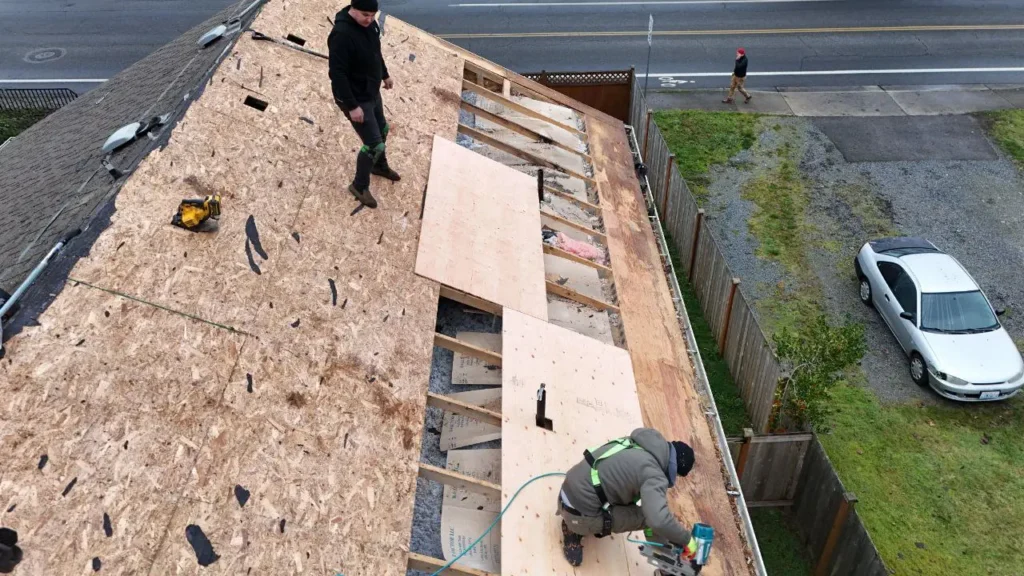
Soft or spongy spots when walking on your roof indicate serious problems with underlying decking—the plywood or OSB that provides the structural surface shingles attach to. This damage results from prolonged moisture exposure that rots wood, compromising structural integrity. Professional inspectors check for this routinely because it’s a critical indicator of extensive damage requiring not just new shingles but also decking replacement, which significantly increases project costs.
Daylight Through the Roof and Ventilation Issues
Daylight visible through roof boards when you’re in the attic is an unambiguous sign of serious problems. You shouldn’t see any exterior light through a properly intact roof. If you can, it means there are gaps, holes, or severely deteriorated areas where weather protection has failed completely. Any condition allowing visible daylight also allows water infiltration, and in Seattle’s climate, those vulnerable areas are being soaked regularly.
Inadequate or failing ventilation represents another hidden problem that dramatically affects roof lifespan in our moisture-rich environment. Attics need proper ventilation to exhaust moisture-laden air and prevent condensation from accumulating on roof decking undersides. Without adequate ventilation, moisture from interior activities rises into the attic, condenses on cooler surfaces, and creates persistent dampness that rots decking from below even when shingles are still shedding exterior rain effectively. We’ve seen situations where homeowners assumed their roof was leaking when the actual problem was inadequate ventilation creating interior condensation.
Ice Damming Damage
Ice damming damage, while less common in Seattle than colder climates, does occur during occasional hard freezes and can cause significant hidden problems. Ice dams form when heat escaping through your roof melts snow, which refreezes at colder eaves, creating an ice barrier that forces meltwater back under shingles. Evidence includes water stains near exterior walls, damaged gutters, and interior wall damage. An Issaquah homeowner called us after January’s unusual cold snap with heavy snow. They noticed water staining on bedroom walls near the roofline. Our inspection revealed ice damming had forced water under shingles that were already approaching end-of-life and didn’t provide adequate protection.
The reality of hidden damage is that it’s often more extensive and serious than visible surface problems, which is why professional inspection is critical. We provide free on-site estimates including thorough inspection from roof level and in accessible attic spaces, giving you complete understanding of your roof’s actual condition rather than just surface appearances. This comprehensive assessment allows us to provide honest guidance about whether strategic repairs can extend viable life or whether hidden damage has progressed to where replacement represents the only sensible option. Our three-year warranty on all workmanship means whether we’re doing repairs or replacement, you have industry-leading protection.
Age: The Silent Factor That Trumps Everything Else
Beyond visible damage and hidden deterioration, the most predictive factor for whether your shingle roof needs replacement is simply how old it is. Age affects every roofing system component simultaneously, and even roofs appearing relatively intact may be approaching failure when they’ve exceeded expected lifespan in Seattle’s challenging climate. Understanding realistic longevity expectations in the Pacific Northwest helps you make proactive decisions before age-related failure forces emergency replacement.
Asphalt Shingle Lifespan in Seattle
Standard three-tab asphalt shingles typically last fifteen to twenty years in Seattle’s moisture-rich environment. Manufacturers might rate them for twenty to twenty-five years based on ideal conditions, but constant rain, limited drying time, moss growth, and periodic severe weather all reduce that theoretical lifespan. If your roof was installed with basic three-tab shingles and it’s approaching or past the fifteen-year mark, replacement should be on your planning horizon regardless of whether you’re experiencing obvious problems. Deterioration accelerates once shingles pass their prime, and what seems fine today can develop serious issues within a single harsh winter.
Architectural or dimensional asphalt shingles perform better and last longer. In Seattle’s climate, you can realistically expect twenty to thirty years of service from quality architectural shingles, assuming proper installation and reasonable maintenance including periodic moss treatment. This wide range reflects how installation quality, maintenance, property conditions like shade coverage, and product quality affect performance. Premium architectural shingles installed by certified contractors on properties with good sun exposure and regular moss prevention might reach thirty years. Mid-grade shingles installed with marginal quality on heavily shaded north-facing slopes never treated for moss might fail closer to twenty years.
Planning Proactively Based on Age
We worked with a Redmond homeowner whose roof was installed twenty-two years ago with quality architectural shingles. The current owner had lived there seven years without noticing obvious problems, so they were surprised when we recommended replacement during routine inspection. We explained that even though the roof wasn’t actively leaking, shingles had reached the age where failure becomes increasingly likely and rapid once it begins. Granule loss was significant, flexibility was gone making shingles vulnerable to cracking, and adhesive seal had degraded to where wind resistance was compromised. By replacing proactively while they could plan the project on their schedule, they avoided much higher costs and stress of emergency replacement during rainy season when sudden failure could cause extensive interior water damage.
Other Roofing Material Lifespans
Metal roofing systems last considerably longer, typically forty to seventy years in our climate depending on specific material and installation quality. If metal roofing shows problems despite being relatively young, this usually indicates installation issues or damage from specific events rather than normal aging. Cedar shake roofs present their own unique aging profile. With proper maintenance including regular treatment, cleaning, and damaged shake replacement, cedar can last twenty-five to thirty-five years. Without that maintenance, which many homeowners neglect, cedar roofs often fail in twenty years or less.
The strategic approach to the age factor involves knowing when your roof was installed, understanding realistic lifespan expectations for your specific material in Seattle’s climate, and planning proactively as you approach that timeline. If you don’t know your roof’s age, your home inspection report from purchase may include this information, or contractors can often estimate age based on materials and wear patterns. Once your roof is within a few years of expected lifespan, scheduling professional inspection annually helps you monitor condition and plan replacement before emergencies develop. We’re always honest with clients about whether their roof’s age alone suggests replacement is imminent or whether they likely have several more years of viable service. This honest assessment approach is why so many Seattle-area homeowners trust us for guidance. For comprehensive information, explore our full range of roofing services.
When Multiple Warning Signs Appear Simultaneously
Individual warning signs like a few curled shingles or some granule loss don’t automatically mean immediate replacement. However, when you see multiple indicators of deterioration simultaneously, evidence strongly suggests comprehensive aging rather than isolated problems addressable with targeted repairs. Understanding how different signs relate and what their combination indicates helps you recognize when replacement has become necessary rather than just advisable.
Clustering of Symptoms Indicates Systemic Problems
The clustering of symptoms typically indicates systemic deterioration where your entire roofing system is approaching or has reached the end of functional life. If you notice significant granule loss, several areas of curling shingles, moss growth across large sections, and your roof is approaching twenty years old, these aren’t four separate problems—they’re four manifestations of the same reality: your roof has aged to where comprehensive replacement makes more sense than piecemeal repairs.
We recently evaluated a Bothell roof where the homeowner tracked problems for eighteen months. It started with shingles in the yard after a windstorm, then increasing granule accumulation in gutters, then curling along the ridge line, and finally a small water stain on their bedroom ceiling. Our inspection found all these visible symptoms plus hidden issues including moisture damage to decking in two areas, inadequate ventilation that contributed to premature aging, and deteriorated flashing around chimney and plumbing vents. The roof was twenty-four years old, well past reasonable lifespan for the basic architectural shingles installed. We explained that while we could patch the immediate leak, they would very likely call us back within months for additional repairs as other areas failed, ultimately spending far more on repeated repairs than replacement would cost. Understanding how much roof repair costs in Seattle helps with this economic analysis.
Scattered Problems vs. Isolated Damage
The repair versus replacement calculation shifts dramatically when problems are scattered across your roof rather than concentrated in one area. If damage is confined to a single section, targeted repair can make excellent economic sense. However, when deterioration appears in multiple locations—multiple slopes showing curling, several areas with missing shingles, moss growth scattered across various sections—this distribution pattern indicates your entire roof is in similar condition. Areas showing obvious symptoms are just slightly ahead of the rest, which will follow shortly.
The Economics of Multiple Repairs
The economic logic becomes clear when you calculate costs. If you spend fifteen hundred dollars repairing one section today, then another twelve hundred addressing a different area in six months, then eight hundred fixing a third problem the following year, you’ve invested thirty-five hundred dollars in repairs on a roof that’s still fundamentally aged and will continue developing problems. That thirty-five hundred provides no value toward the eventual replacement you’ll still need, likely within the next few years. Had you invested that money toward replacement instead, you’d have a new roof with decades of remaining life and comprehensive warranty protection.
Timing considerations also affect the multiple-symptom scenario. If you’re experiencing several warning signs in March as Seattle heads into our wettest months, delaying replacement means those vulnerable areas will be exposed to months of heavy rainfall. Each rain event risks additional water infiltration, expanding damage zones, and increasing repair costs. We always approach these assessments with complete transparency, explaining exactly what we’re seeing, why it indicates replacement rather than repair, and what happens if you choose to delay. Our free on-site estimates include detailed written documentation of conditions we observe. We won’t pressure you into immediate replacement if you need time to budget, but we will be honest about delay risks and the likely trajectory of your roof’s deteriorating condition.
Location Matters: Where Damage Appears Tells You What It Means
Not all roof damage carries the same implications for whether repair or replacement represents the appropriate response. The specific location where problems appear provides crucial information about severity, underlying causes, and whether damage indicates isolated issues or systemic failure. Understanding how different roof areas function and what problems in those locations typically mean helps you evaluate the significance of damage you’re observing or that contractors report.
Roof Valleys: High-Stress Areas
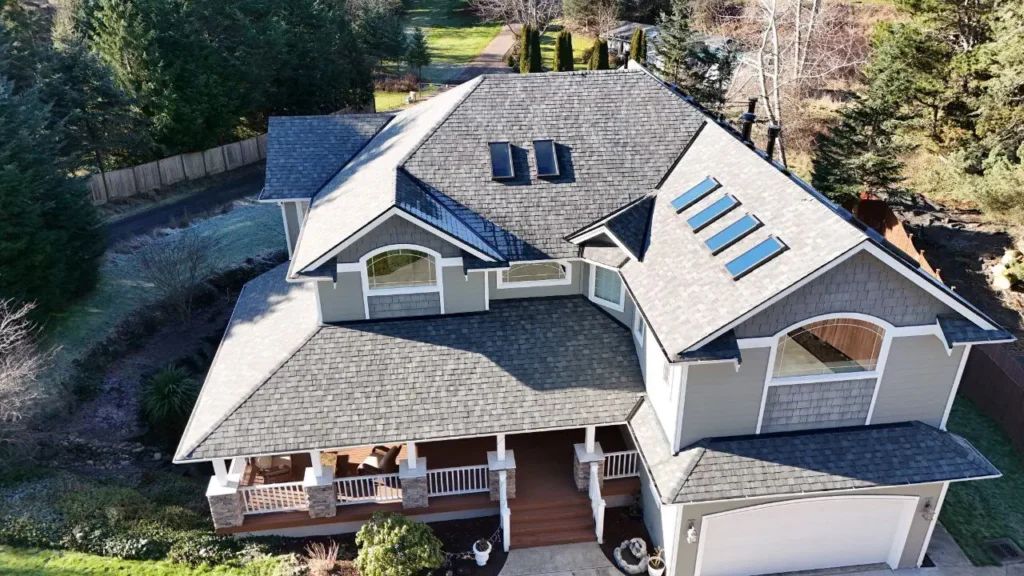
Roof valleys—the V-shaped channels where two roof planes meet—are particularly critical areas experiencing more stress and water flow than other sections. Valleys concentrate runoff from large roof surface areas, channeling substantial water volume during Seattle’s heavy rains. They also collect debris that can trap moisture and accelerate deterioration. Damage in valleys often indicates flashing failure, shingle deterioration from concentrated water exposure, or inadequate installation of valley protection. Minor valley damage on an otherwise sound roof can often be repaired effectively. However, if valleys are failing in multiple locations or damage extends significantly beyond the valley itself, this suggests the roof has been experiencing moisture problems severe enough to compromise these critical areas, which typically correlates with advanced age and comprehensive deterioration.
Penetrations and Flashing Failures
Problems around roof penetrations—chimneys, plumbing vent pipes, exhaust fans, skylights—are extremely common and don’t automatically indicate full replacement needs. These penetrations require careful flashing to seal junctions, and flashing can fail while surrounding roof remains in good condition. We frequently repair flashing around chimneys and vent pipes on roofs with years of remaining life otherwise. The key question is whether the problem is truly limited to flashing and immediately surrounding area, or whether failed flashing has allowed water infiltration causing broader damage to decking and structure. For both residential roof repair and commercial roof repair projects, accurate diagnosis of penetration issues is essential.
Edge Damage and Drainage Issues
Edge damage along eaves and rakes where your roof meets gutters can indicate several different underlying problems. Sometimes it’s simply storm damage from wind lifting shingle edges, which is usually repairable. Other times it indicates that ice and water shield wasn’t installed or has failed. In some cases, edge deterioration results from chronic water backup caused by clogged gutters or inadequate drainage, pointing to maintenance issues rather than roof failure. We worked with a Kirkland homeowner whose roof edges showed significant damage on one corner. Investigation revealed a clogged downspout causing water to overflow and run back against the roof edge. The downspout problem was easily fixed, and the damaged edge section was repairable.
Ridge Caps and Slope-Specific Wear
Ridge caps—shingles covering the peak where two slopes meet—often show wear before other areas because they’re exposed to weather from both sides and experience more thermal cycling. Ridge cap damage doesn’t necessarily mean your entire roof needs replacement; ridge caps can often be replaced separately while field shingles remain intact. However, if ridge caps are failing on a roof also showing other age signs, it’s often most cost-effective to include ridge replacement as part of comprehensive re-roofing.
The location analysis ultimately helps distinguish between problems addressable with targeted repairs because they’re genuinely isolated, and problems that appear localized but actually indicate broader deterioration. Our immediate response capability means we can often inspect your roof same-day or next-day when you contact us, providing quick assessment that helps you understand what you’re dealing with and how urgently it needs addressing. This rapid response matters tremendously during Seattle’s rainy season when even short delays can allow water damage to expand significantly. In urgent situations requiring emergency roof repair, we’re available to help protect your home immediately.
The Total Cost Equation: Repair Now or Replace Soon
Frequently Asked Questions
How long should a shingle roof last in Seattle?
In Seattle’s climate, architectural asphalt shingles typically last twenty to thirty years with proper installation and maintenance, while basic three-tab shingles usually last fifteen to twenty years. These lifespans are shorter than manufacturer ratings because our constant moisture, limited drying time, moss growth, and shade from evergreen trees all accelerate deterioration. Metal roofing lasts much longer, typically forty to seventy years. Your roof’s actual lifespan depends on installation quality, maintenance including moss treatment, property conditions like shade coverage, and product quality. Roofs on heavily shaded properties or those that never receive moss treatment often fail on the shorter end of these ranges.
Can I just repair my roof instead of replacing it?
This depends entirely on your roof’s age, overall condition, and the extent of damage. Isolated repairs make excellent economic sense when your roof is relatively young and damage is clearly limited to specific areas from events like storms. However, if your roof is approaching or past its expected lifespan for Seattle’s climate, or if you’re experiencing problems in multiple locations suggesting systemic deterioration, continuing to invest in repairs usually costs more over time than replacement. A professional inspection helps determine whether repair genuinely extends meaningful lifespan or just delays inevitable replacement by months while wasting money that could go toward a permanent solution.
What are the most important warning signs that my roof needs replacement?
The most critical indicators are multiple warning signs appearing simultaneously, which suggests comprehensive deterioration rather than isolated problems. Look for combinations like significant granule loss plus curling shingles plus moss growth on a roof approaching twenty years old. Other serious signs include water stains in your attic or living spaces, missing shingles in multiple locations, extensive bare spots where protective granules have worn away, and moss that’s worked underneath shingle edges lifting them. Your roof’s age is also a primary factor—even if damage isn’t obvious, roofs past their expected lifespan for Seattle’s climate should be professionally inspected regularly to catch problems before they cause interior water damage.
How much does roof replacement cost in Seattle?
Roof replacement in Seattle typically ranges from eight thousand to twenty-five thousand dollars depending on your home’s size, the material you choose, and roof complexity. A typical fifteen hundred square foot home with a straightforward design using quality architectural asphalt shingles generally costs between nine and twelve thousand dollars for complete replacement including materials, labor, underlayment, ventilation, and debris disposal. Larger homes, complex roof designs with multiple valleys and penetrations, or premium materials like metal roofing increase costs. The best way to understand your specific project cost is to get detailed estimates from licensed contractors who can assess your home’s requirements and provide transparent pricing breakdowns. Remember that the lowest price rarely represents the best value when installation quality directly affects how long your investment lasts in Seattle’s challenging climate.
Reliable roofing experts at your service – Construction Elite LLC
We understand Seattle’s specific challenges intimately because we live and work in these communities. We know how moss behaves differently in Bellevue versus Woodinville based on tree coverage and microclimate variations. We recognize common failure patterns of roofs in different King County neighborhoods. We understand local building codes and permit requirements. This local expertise ensures your project addresses Pacific Northwest conditions specifically.